
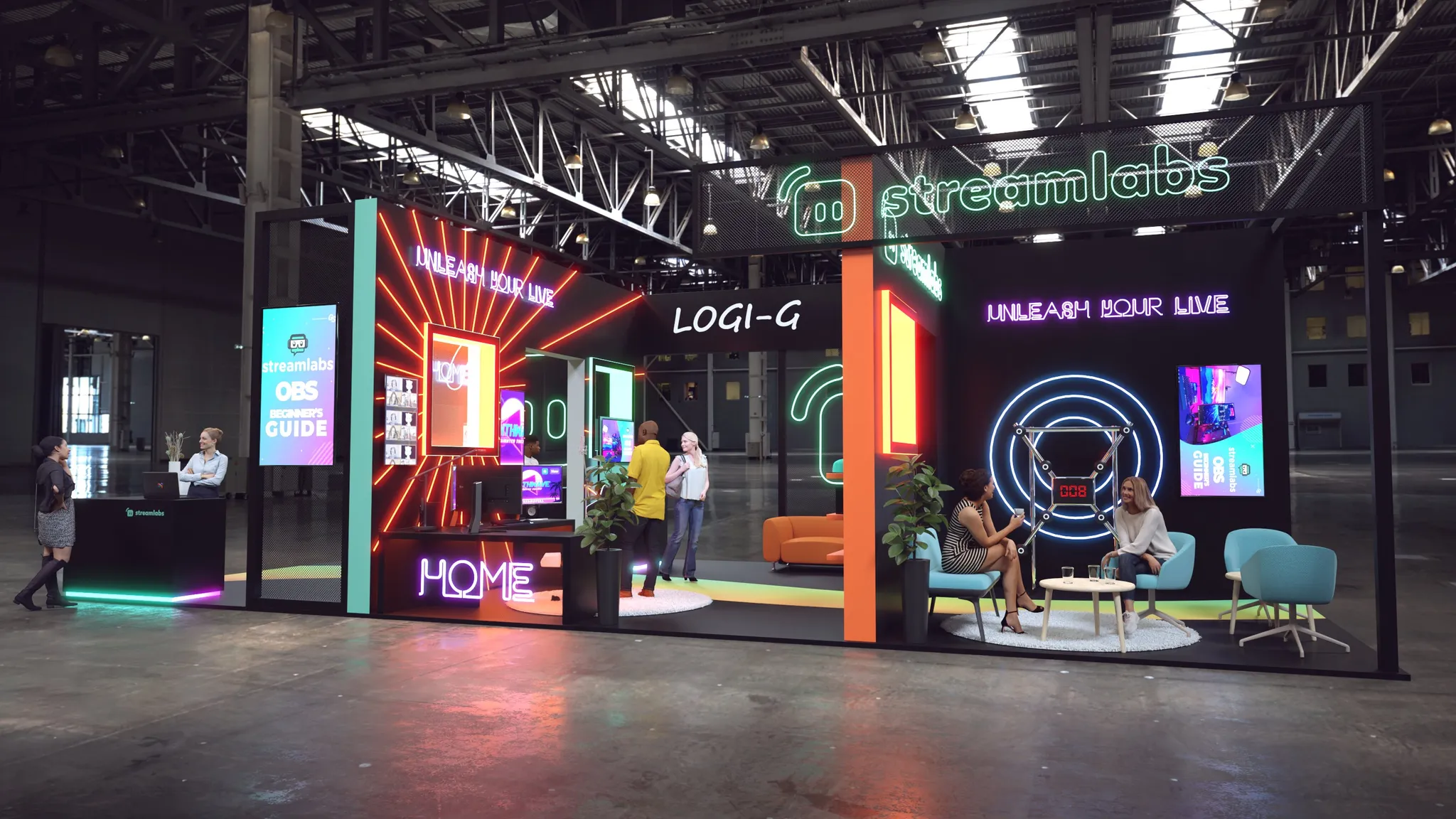
A sponsor activation has to create a reason for people to stop. The environment, signage, staff behavior, and interaction model all need to work together so the sponsor feels present in a way guests actually notice.
Augusta buyers use this format when the goal is engagement, not passive exposure.
Execution priorities
- Make the sponsor role visible through activity, not only placement.
- Plan the interaction model before choosing the final footprint.
- Keep traffic flow and sponsor visibility from competing.
- Use the environment to create an easy first action for guests.
Augusta trade show market
Trade shows in Augusta move fast.
the conference is designed with the U.S.
Augusta convention venues and meeting properties
SRP Park is one of the anchors.
Miller Theater. the theater offers Brian J.
Bell Auditorium: the Bell Auditorium's venue guide actively markets premium hospitality and a year-round event calendar at the downtown Augusta address of 712 Telfair Street.
Augusta labor and venue services
There is no single labor model for Augusta trade shows.
Use phrases such as 'venue-directed services', 'official exhibitor guide', 'service manual review', 'managed planning support', and 'show-contractor coordination aligned with current venue rules'. Treat Augusta as a CSRA market where downtown convention work, suburban exhibition halls, stadium hospitality, university facilities, and boutique hotels each behave differently.
Augusta neighborhoods and event districts
North Augusta, Riverside Village, Belvedere, Clearwater form the North Augusta Riverside Village cluster. This cluster combines the stadium, hotel, riverfront dining, and mixed-use hospitality inventory on the South Carolina side of the metro.
Aiken and Westward South Carolina — Aiken, Downtown Aiken, Graniteville — is a different environment. Aiken adds university-scale public-event capacity and polished banquet inventory that can support overflow or standalone CSRA programs.
What's included in the project scope
Individual projects layer or remove items based on scope.
a bad one has many, because they weren't.
Those run alongside the engagement rather than inside it.
The process from start to finish
After the brief, the work turns to the building itself.
Install days are owned by a single on-site lead.
Throughout show hours, the on-site lead stays present.
Strike and closeout happen the same day.
Budget and timeline
Every project has the same cost drivers.
Lead time drives everything. Custom: 16 to 20 weeks. Rental: 8 to 12.
What a successful project looks like
Most programs in Augusta are evaluated on lead-capture volume, meetings booked on the floor, and qualified-pipeline attribution after the show. The booth is a means to those numbers — it is not the number itself.
A week after the show, the booth's actual floor performance is already clearer than any pre-show projection. We document those observations alongside the technical closeout so the next cycle inherits real signal, not nostalgia.
The advantage of a local Augusta team
Trade Show Services of Augusta keeps the work local.
Consistency across show dates is the other reason to hire local. The same crew that built the booth runs the install, knows the pack-out, and catches the small things — a missing hardware pack, a graphic edge that needs reseating, a storage crate routed to the wrong bay — without needing the client team to intervene.
Sponsor activation questions
Do you work at Topgolf Augusta?
Yes.
How does staffing work for a sponsor activation environments environment?
Staffing on sponsor activation environments jobs reflects the experience: a build crew, a run crew, and the brand-side hosts. That split holds when the design intent is clear before the first crate arrives.
How much lead time does a this work build need?
Experience-led environments need design and prototyping time before fabrication starts. Locking the experience intent early is the gate; rushing it usually shows up in the final room.
What kicks off a the program project?
The experience goal, audience profile, run length, and the venue or environment the build is going into. From there, the design intent drives the rest of the plan.
Who runs a this service environment on-site?
A field lead handles the build and the live operation; the brand-side host carries audience-facing flow. That split is how the experience survives a long run.
Can a the plan environment travel?
Most of it can. Modular pieces carry to the next venue; one-off scenic does not. The reusable parts are the ones supporting the experience intent.
What happens if part of the this work environment fails?
The field lead resolves it without breaking the run. The way the environment was designed to support the experience is what makes the substitution feel invisible to the audience.