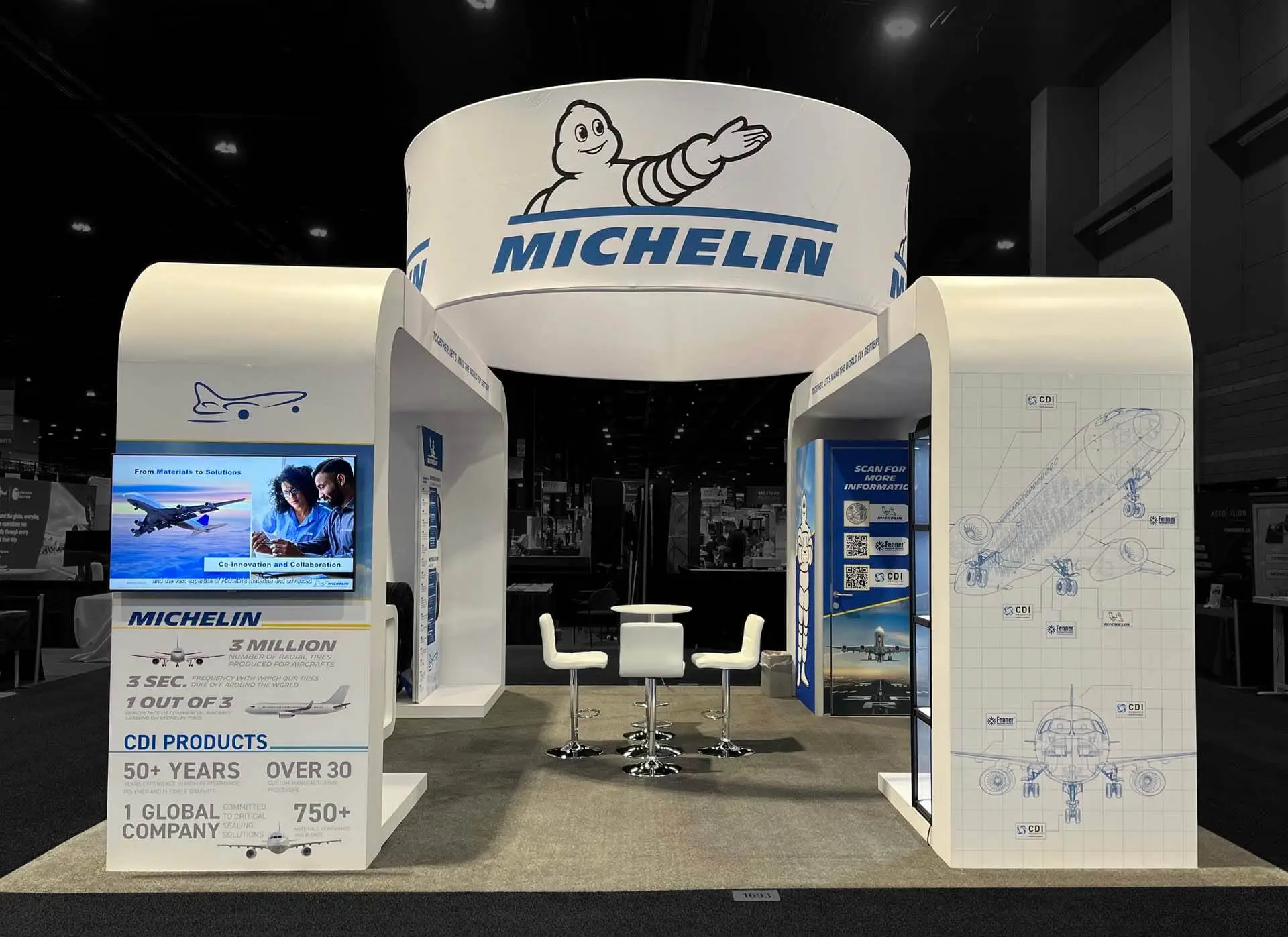
Museum-Style Brand Installations works best when it stays connected to the real Augusta sequence: venue communication, labor timing, graphics, fabrication, AV, freight, and field supervision moving on the same schedule. The installations is an environment category with its own staging logic, attendee flow, and venue-use pattern.
The installations underperforms when the environment concept ignores venue flow, audience dwell time, and the real staffing and logistics path behind it. If the brief is tied to University, Workforce, and Public Events, conditions at Bell Auditorium, or access questions around Clearwater, the installations has to fit the whole job instead of drifting off as a disconnected task.
The copy stays grounded in the route, the room, and the decision chain because those are the parts that change the price and the pace first.
Execution priorities
- Lock the venue, show date, and service mix before the scope gets too loose for Museum-Style Brand Installations.
- Keep Exhibitor-Appointed Contractor Coordination, labor timing, graphics, AV, and freight on one readable schedule for Museum-Style Brand Installations.
- Review current venue rules, organizer deadlines, utilities, dock timing, and exhibitor paperwork early enough to shape Museum-Style Brand Installations.
- Name the on-site lead before move-in so venue questions, labor calls, and punch-list items have a clear owner.
- Plan dismantle, returns, warehousing, and the next stop before the program opens.
Where Museum-Style Brand Installations actually belong
The installations matters in Augusta when it changes venue coordination, labor timing, freight, graphics, and room-level sequencing, not simply when it sounds good in a scope list. That puts a specific brief in front of the design team before any production decisions get made.
On the Augusta floor, the installations only behave when the layout was written into the design intent rather than bolted on after install.
Where Augusta shows actually happen
the plan has to match the specific building.
USCA Convocation Center: the Convocation Center is a 97,600-square-foot facility with capacity ranging from 3,500 to 4,100 patrons, retractable seating, a VIP room for up to 200 patrons, and rentable meeting space.
Edgar's Above Broad.
Who owns what inside a museum-style brand installations build
On a the installations job, the design team owns the experience, the production team owns the structure, and the field lead owns the room once the doors open.
The environment behaves when each lane stays in its own scope; the staff plan matches the spaces the design actually created instead of the spaces the renderings implied.
The main Augusta event areas
North Augusta Riverside Village covers North Augusta, Riverside Village, Belvedere, Clearwater. This cluster combines the stadium, hotel, riverfront dining, and mixed-use hospitality inventory on the South Carolina side of the metro.
Aiken and Westward South Carolina — Aiken, Downtown Aiken, Graniteville — is a different environment. Aiken adds university-scale public-event capacity and polished banquet inventory that can support overflow or standalone CSRA programs.
What builds out a museum-style brand installations environment
For the installations, the line items support the experience the format is supposed to deliver: scenic, AV, interaction layers, hospitality, and the staff infrastructure that keeps the room running.
The build only earns its place when those items are already in the design intent before fabrication starts, because retrofitting them later usually compromises the experience.
How a museum-style brand installations build comes together
For the installations, the sequence runs from experience design and venue confirmation through fabrication, install, the live activation, and strike.
The arc behaves when production starts after the design intent is locked, so fabrication is not redoing decisions in week three and the final environment matches the brief.
What changes cost and timing on museum-style brand installations
On the installations, budget moves with experience density: scenic surface area, AV and interaction layers, staffing, and how long the environment has to hold up under live use.
Timeline is mostly design and prototyping; locking the experience intent before fabrication keeps the schedule from collecting last-minute changes that compromise the final read.
Outcomes we optimize for
Most programs in Augusta are evaluated on lead-capture volume, meetings booked on the floor, and qualified-pipeline attribution after the show. The booth is a means to those numbers — it is not the number itself.
A week after the show, the booth's actual floor performance is already clearer than any pre-show projection. We document those observations alongside the technical closeout so the next cycle inherits real signal, not nostalgia.
What strong museum-style brand installations look like
Strong the installations treat the environment as a system, not a backdrop. The installations matters in Augusta when it changes venue coordination, labor timing, freight, graphics, and room-level sequencing, not simply when it sounds good in a scope list.
The design choices come from the brief rather than from a stock kit, and the audience experiences the format the way the program intended instead of a watered-down version of the rendering.
Museum-Style Brand Installations planning questions
Do you work at USCA Convocation Center?
Yes.
How does staffing work for a museum-style brand installations environment?
Staffing on the installations jobs reflects the experience: a build crew, a run crew, and the brand-side hosts.
How much lead time does a this work build need?
Experience-led environments need design and prototyping time before fabrication starts. Locking the experience intent early is the gate; rushing it usually shows up in the final room.
What kicks off a the program project?
From there, the design intent drives the rest of the plan.
Who runs a this service environment on-site?
That split is how the experience survives a long run.
Can a the plan environment travel?
Most of it can.
What happens if part of the this work environment fails?
The field lead resolves it without breaking the run.