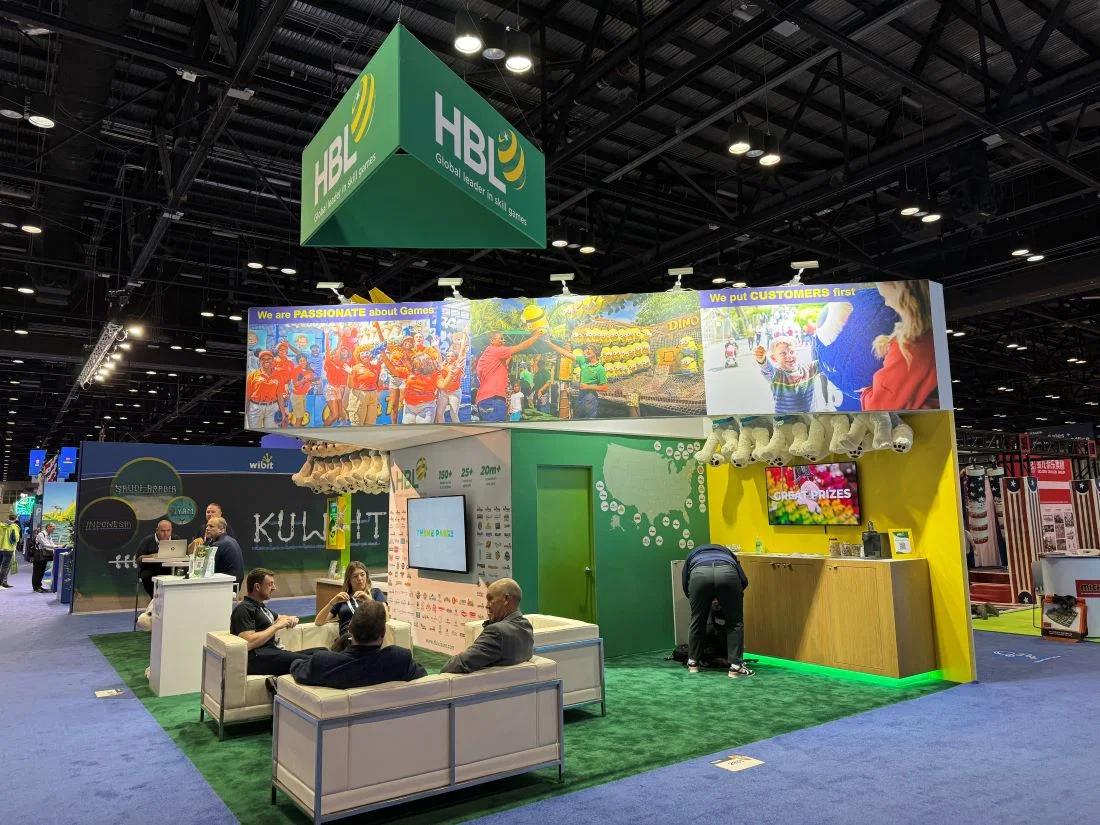
This format is built for short-run impact.
The space has to feel intentional from the moment it appears, but it also has to pack down cleanly once the borrow ends.
That means setup, interaction, and removal all need to be designed as one sequence.
Execution priorities
- Keep the footprint light enough to travel well.
- Make the guest action visible without explanation.
- Protect the borrowed space before, during, and after the activation.
- Treat the removal path as part of the design brief.
What drives the schedule on experiential pop-up environments
For experiential pop-up environments, the timeline is driven by experience design, fabrication, and the live window the format is supposed to support.
That schedule respects the design intent from the start; otherwise design and production end up trading paint in the last two weeks, and the final environment looks like a compromise.
Augusta venues we work
The full venue can handle roughly 350 to 400 people, with seated capacity of 250 to 300, plus lounge and patio options.
Topgolf Augusta.
Snelling Conference Center is one of the anchors.
What makes our work different
Trade Show Services of Augusta keeps the work local.
Consistency across show dates is the other reason to hire local. The same crew that built the booth runs the install, knows the pack-out, and catches the small things — a missing hardware pack, a graphic edge that needs reseating, a storage crate routed to the wrong bay — without needing the client team to intervene.
Operational rules on the Augusta floor
Augusta floor operations follow the venue's own manual.
Practical planning rules for the environments in Augusta: When a venue has a named service path or staffing schedule in public documents, tie copy to that path rather than making sweeping citywide labor statements.
Augusta neighborhoods and event districts
The Downtown Augusta Riverfront Convention District area runs through Augusta, Downtown Augusta, Riverfront Augusta, Broad Street. This is the market's strongest convention and civic-events cluster, combining the convention center, downtown hotels, museums, theaters, rooftop venues, and the riverfront.
West Augusta and Washington Road Corridor runs across West Augusta, National Hills, Washington Road Corridor. This cluster matters for golf-week traffic, boutique hotels, Topgolf, and business events that want easier parking and interstate access.
What builds out an experiential pop-up environments environment
For the environments, the line items support the experience the format is supposed to deliver: scenic, AV, interaction layers, hospitality, and the staff infrastructure that keeps the room running.
The build only earns its place when those items are already in the design intent before fabrication starts, because retrofitting them later usually compromises the experience.
What an engagement actually looks like
After the brief, the work turns to the building itself.
Install days are owned by a single on-site lead.
Throughout show hours, the on-site lead stays present.
Strike and closeout happen the same day.
Pricing and scheduling
Every project has the same cost drivers.
Lead time drives everything. Custom: 16 to 20 weeks. Rental: 8 to 12.
What a successful project looks like
Most programs in Augusta are evaluated on lead-capture volume, meetings booked on the floor, and qualified-pipeline attribution after the show. The booth is a means to those numbers — it is not the number itself.
A week after the show, the booth's actual floor performance is already clearer than any pre-show projection. We document those observations alongside the technical closeout so the next cycle inherits real signal, not nostalgia.
Experiential Pop-Up Environments planning questions
Do you work at Morris Museum of Art?
Yes.
How does staffing work for an experiential pop-up environments environment?
Staffing on the environments jobs reflects the experience: a build crew, a run crew, and the brand-side hosts.
How much lead time does an this work build need?
Experience-led environments need design and prototyping time before fabrication starts. Locking the experience intent early is the gate; rushing it usually shows up in the final room.
What kicks off an the program project?
From there, the design intent drives the rest of the plan.
Who runs an this service environment on-site?
That split is how the experience survives a long run.
Can an the plan environment travel?
Most of it can.
What happens if part of the this work environment fails?
The field lead resolves it without breaking the run.