
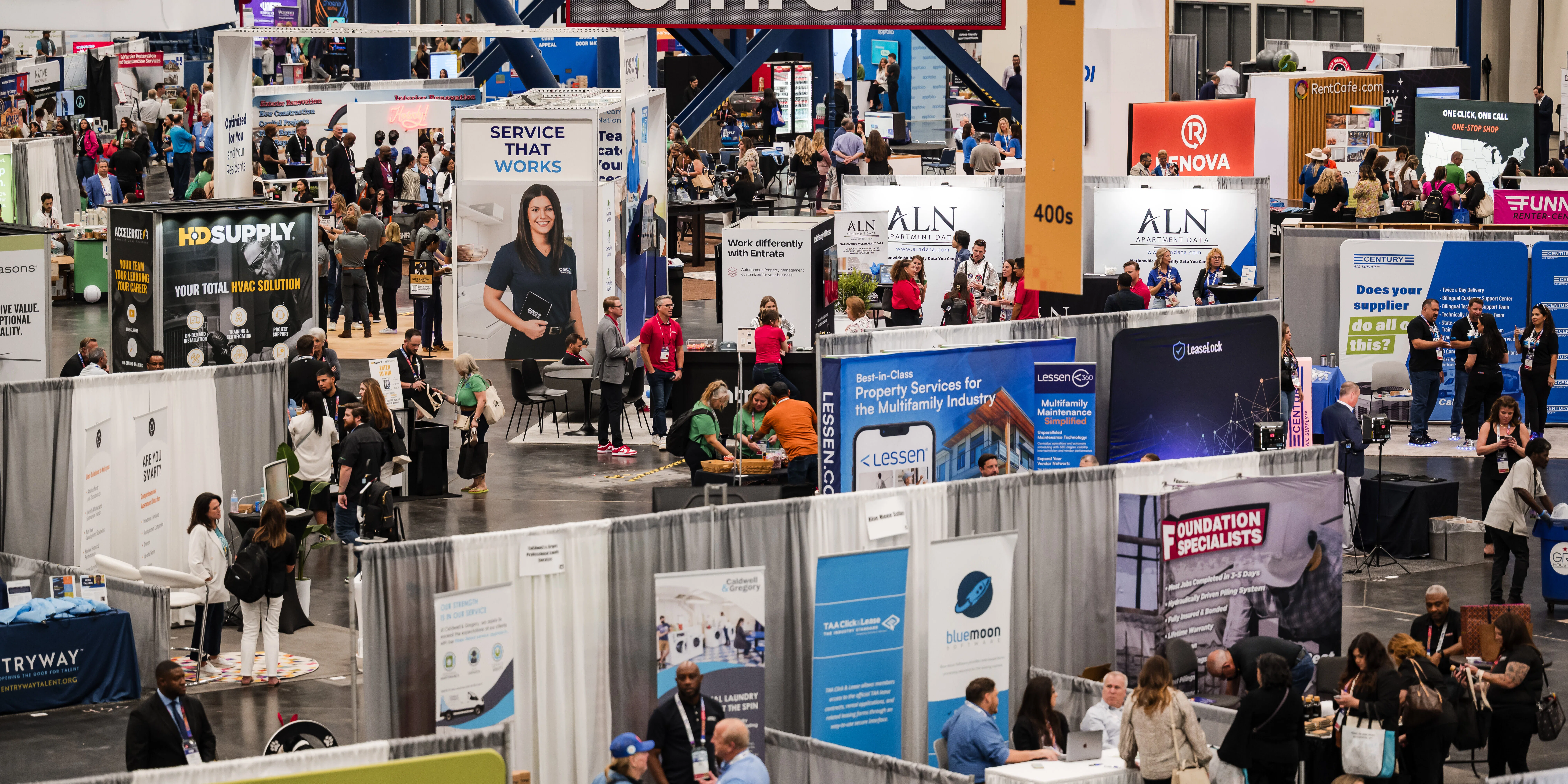
Registration and Attendee Experience works best when it stays connected to the real Augusta sequence: venue communication, labor timing, graphics, fabrication, AV, freight, and field supervision moving on the same schedule. The experience points to cross-functional execution depth that affects pre-show planning, field leadership, and repeatability across venues.
The experience only creates value when it changes how the project is run, not when it turns into empty language detached from venue and show-week decisions. If the brief is tied to Suburban Expos and Community Trade Shows, conditions at Sacred Heart Cultural Center, or access questions around Clearwater, the experience has to fit the whole job instead of drifting off as a disconnected task.
A useful Augusta section for the experience should help the buyer see where the work will slow down, where it will speed up, and who has to own the next call.
Execution priorities
- Lock the venue, show date, and service mix before the scope gets too loose for Registration and Attendee Experience.
- Keep Conference Registration Environments, labor timing, graphics, AV, and freight on one readable schedule for Registration and Attendee Experience.
- Review current venue rules, organizer deadlines, utilities, dock timing, and exhibitor paperwork early enough to shape Registration and Attendee Experience.
- Name the on-site lead before move-in so venue questions, labor calls, and punch-list items have a clear owner.
- Plan dismantle, returns, warehousing, and the next stop before the program opens.
Where Augusta shows actually happen
a few Augusta venues carry most of the calendar.
Enterprise Mill Events Center.
The Foundry at Rae's Creek is one of the anchors.
Who carries the work inside registration and attendee experience
Inside this capability, the working assignment is a single accountable owner with the rest of the program feeding into it. The experience matters in Augusta when it changes venue coordination, labor timing, freight, graphics, and room-level sequencing, not simply when it sounds good in a scope list.
Design, fabrication, field, and finance all see one map, one issue log, and one decision-maker for this lane; that is what makes the capability read as governance instead of administration.
Augusta neighborhoods and event districts
North Augusta, Riverside Village, Belvedere, Clearwater form the North Augusta Riverside Village cluster. This cluster combines the stadium, hotel, riverfront dining, and mixed-use hospitality inventory on the South Carolina side of the metro.
Columbia County Exhibition Corridor — Martinez, Evans, Grovetown — is a different environment. The Columbia County Exhibition Center and growth along I-20 create Augusta's main suburban expo and conference corridor.
What's included in the project scope
Individual projects layer or remove items based on scope.
Scope boundary is as important as scope inclusion.
How registration and attendee experience runs across a program
As a capability, the experience runs as a continuous lane through the engagement: kickoff hand-off, weekly cadence, milestones, show-week support, and post-show audit.
The lane stays useful when the cadence holds even when individual events get bumpy; the value of the capability is consistency, not heroics.
Budget and timeline
Six variables drive the cost: custom versus rental, booth footprint and complexity, venue-specific labor and rigging fees, graphics scope and substrate, freight distance and timing, and the number of on-site supervision days.
A clean schedule starts 4 to 5 months out for custom work and 2 to 3 months for rentals. Shorter lead times are workable but push rush premiums and limit material choices.
Outcomes we optimize for
Most programs in Augusta are evaluated on lead-capture volume, meetings booked on the floor, and qualified-pipeline attribution after the show. The booth is a means to those numbers — it is not the number itself.
Client teams sometimes want the booth to carry the pipeline on its own, but the best-performing programs treat the booth as a platform and put real operators on it. On-floor conversation discipline moves the KPIs more than any scenic decision.
The advantage of a local Augusta team
Local fabrication means real-time problem-solving. A graphic that needs to be reprinted at 6 a.m.
Consistency across show dates is the other reason to hire local. The same crew that built the booth runs the install, knows the pack-out, and catches the small things — a missing hardware pack, a graphic edge that needs reseating, a storage crate routed to the wrong bay — without needing the client team to intervene.
Augusta trade show market
Trade shows in Augusta move fast.
AGS is served by Delta to Atlanta and American to Charlotte, Dallas, and Washington, D.C., and that the airport sits about six miles south of Augusta's central business district.
Registration and Attendee Experience planning questions
Do you work at Bell Auditorium?
Yes.
How does registration and attendee experience interact with on-site staffing?
The experience sits upstream of the field crew.
When should this work get put in place?
Before the first event, ideally during the program-planning phase. The cadence is the value, and the cadence only works when it is already running by the time the calendar gets active.
What is needed to put the program in place?
The full event calendar, the existing vendor stack, the asset inventory, and the reporting expectations. Those four pieces define what the capability actually has to manage.
Who runs this service on the day of an event?
The capability owner stays upstream; the field team executes. The day works when the program-level decisions have already been locked.
Does the plan cover the next city on the calendar?
Yes; that is the point.
What happens when something breaks across a program?
That is exactly what this capability exists for.